Important updates to the COVID-19 vaccine recommendations for 2025
Home / News & Opportunities / Latest news / Current post
The Australian Immunisation Handbook has been updated to reflect the latest COVID-19 vaccine recommendations for 2025. The immunocompromising and medical conditions list in the handbook has also been updated.
According to the recent updates, healthy infants, children, and adolescents under 18 are not routinely recommended to receive COVID-19 vaccines. However, children aged 5 and older with medical risk conditions are eligible for vaccination and should receive a dose every 12 months. Women who are planning to become pregnant, are currently pregnant, or are breastfeeding are advised to consider COVID-19 vaccination, in addition to their other routine vaccinations.
It is important to review
the handbook to ensure eligible children receive their recommended vaccines.
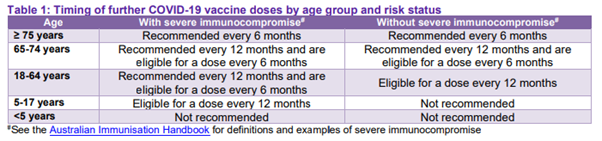
The National Centre for Immunisation Research and Surveillance (NCIRS) encourages practitioners to take advantage of opportunistic COVID-19 vaccinations for eligible patients to enhance vaccination rates. COVID-19 vaccines can be safely administered alongside other recommended vaccines.
Despite recommendations from the Australian Technical Advisory Group on Immunisation (ATAGI), national vaccine uptake remains low among vulnerable groups.
National vaccinations rates for groups who have received a COVID-19 vaccine in the past six months:
- 20% of adults aged 65 - 74
- 3.1% of adults aged 18–64
- 6.6% of NDIS participants
- 2.49% of First Nations Peoples
- 3.1% of people born overseas
- 2.1% of multilingual people
These figures highlight how important it is for our primary care workforce to review eligibility and recommend vaccination to protect vulnerable populations.
Latest news